
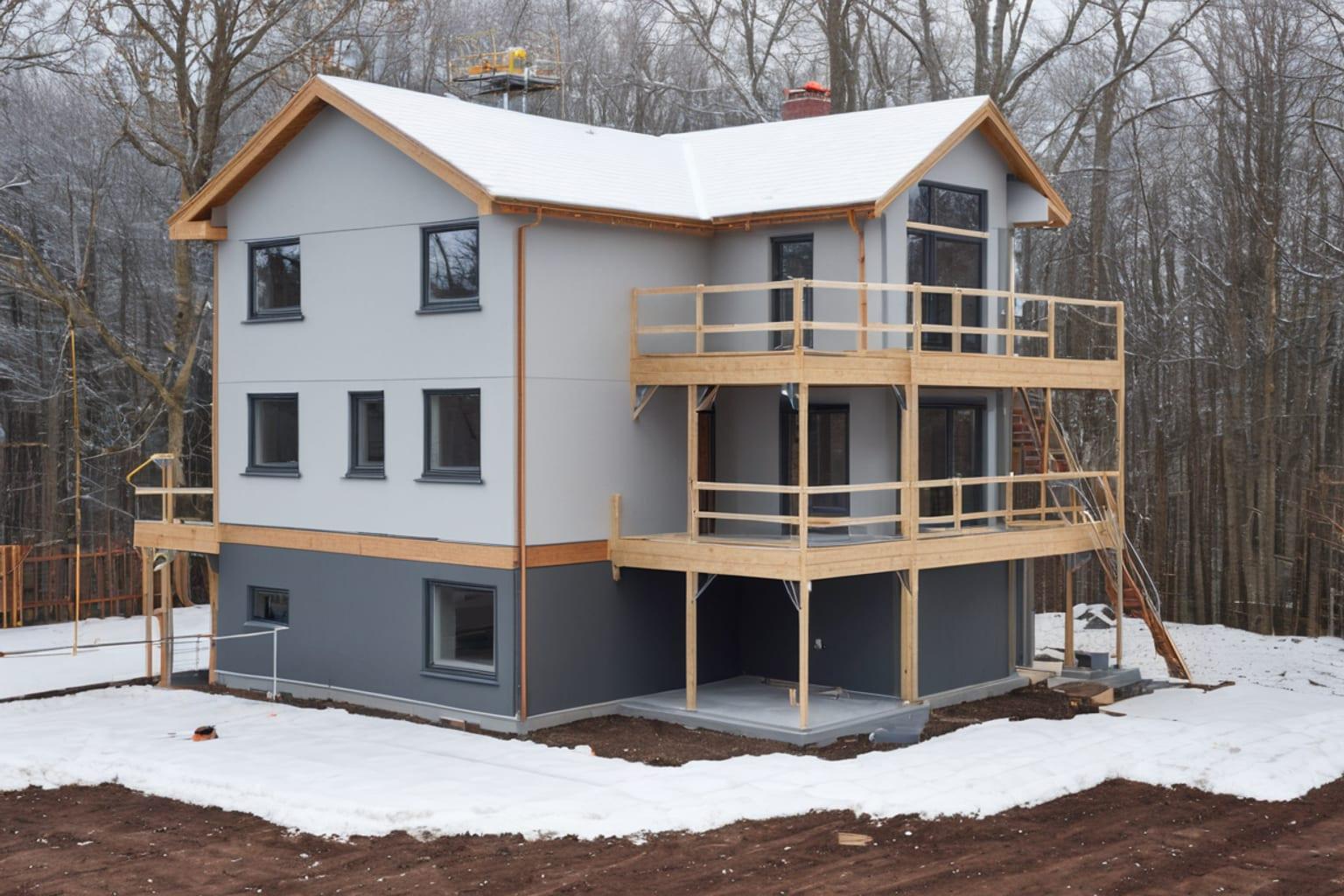
Building a house on a budget doesn't mean cutting corners on quality or ending up with a cheap-looking home. It means being strategic about where your money goes and making intentional choices about what matters most to you. With smart planning, you can build an attractive, durable home for significantly less than the average construction cost.
The first step to budget-conscious building is understanding that not every dollar spent yields equal return. Some investments in your home compound in value and comfort over decades. Others are wasteful spending on features you don't need or rarely use.
01The True Cost of Building
Before diving into where to save, understand what drives construction costs. The National Association of Home Builders estimates that land preparation accounts for 10-15% of total project cost, materials for 20-30%, labor for 25-35%, and overhead/profit for 15-25%.
These percentages vary by region and project type, but they illustrate an important point: labor represents nearly a third of your budget. This means that design choices affecting complexity directly impact cost. A simple, efficient design costs dramatically less to build than a complex one.
The average cost to build a house in 2024 ranges from $165-$250 per square foot depending on region and quality standards. This means a 2,000 square foot home might cost $330,000-$500,000 to build—not including land.
But here's the opportunity: choosing a modest-sized home over a large one is the single most effective way to reduce total construction cost. A 1,200 square foot home costs roughly 50% less to build than a 2,000 square foot home. This isn't penny-pinching; it's strategic.
02The Power of Right-Sizing
Before worrying about cost-cutting strategies, address the fundamental question: what size home do you actually need?
Most homeowners vastly overestimate the square footage they need. The average American home sits at 2,400+ square feet, yet many families live comfortably and happily in 1,200-1,500 square foot homes. Each 100 square feet you eliminate from your design saves roughly $16,500-$25,000 in construction cost (at $165-$250 per square foot).
This isn't deprivation. Our small house plans demonstrate that thoughtfully designed compact homes accommodate modern living beautifully. Consider a 1,400 square foot home versus a 1,800 square foot home. The 400 square foot difference—roughly the size of a large bedroom and master bath—might cost $66,000-$100,000 to build. Is that extra space worth six figures plus ongoing heating, cooling, and maintenance costs?
Right-sizing is the foundation of budget-conscious building. Before implementing cost-cutting strategies, ensure you're not building more than you need.
03Where Smart Budgeting Saves Money
1. Choose a Simple, Efficient Design
Architectural complexity drives costs dramatically. Features that add cost:
- Complex roof lines and multiple roof pitches
- Elaborate exterior detailing
- Bay windows and turrets
- Curved walls
- Multiple stories with different footprints
- Extensive exterior materials mixing (stone, brick, siding combinations)
Designs that save money:
- Simple rectangular footprints
- Single or simple two-story designs
- Straightforward roof lines
- Clean exterior details
- Consistent materials (one siding choice, one roofing type)
- Open floor plans
A simple 1,500 square foot ranch home with a straightforward layout costs 20-30% less to build than an ornate 1,500 square foot home with complex roof lines and elaborate details. Both can be beautiful; one is simply more efficient to build.
Explore our ranch house plans to see how straightforward designs deliver style without unnecessary complexity.
2. Optimize Square Footage Efficiency
Every square foot costs money to build, heat, cool, and maintain. Make each square foot count:
- Open floor plans eliminate unnecessary walls
- Multi-functional spaces reduce total square footage needs
- High ceilings in key areas, standard heights elsewhere
- Minimal hallway space
- Efficient room sizes that avoid wasted dimensions
A well-designed 1,200 square foot open-plan home feels more spacious and functional than a poorly designed 1,500 square foot home with cramped rooms and maze-like layouts. Efficiency is invisible but saves money.
3. Standardize Materials
Building departments and builders often have standard-size windows, doors, and components already in stock. Specifying non-standard sizes requires special orders, increases cost, and extends timelines.
- Use standard window sizes
- Stick with standard door heights and widths
- Choose common lumber dimensions
- Select roofing materials that suppliers stock locally
- Limit exterior material variety
This approach saves 5-10% on material costs and accelerates the building timeline, which reduces labor costs.
4. Minimize Site Work Complexity
Site preparation can represent 10-15% of your budget. Maximize efficiency:
- Choose relatively level sites rather than steep slopes
- Avoid sites requiring extensive site fill or cut work
- Consider sites already served by utilities versus those requiring new utility runs
- Minimize soil remediation needs
- Avoid sites with complicated drainage issues
If building on challenging land, budget significantly for site work. It's one of the hardest costs to reduce after construction begins.
5. Strategize On Utilities and Systems
Mechanical systems represent 25-30% of construction cost. Optimize:
- Standard HVAC layouts (central system versus zoned)
- Tankless water heaters instead of traditional tanks (lower maintenance, smaller footprint)
- Single-zone heating/cooling rather than elaborate zoned systems
- Electric resistance heat in modest spaces instead of extended HVAC runs
- Standard electrical panel sizing
That said, don't underinvest in efficiency. An efficient HVAC system costs 10% more upfront but saves 30-40% on energy costs over 20 years. That's a smart investment.
6. Choose Durable Standard Finishes
Finishes—paint, flooring, fixtures—are where many homeowners overspend. Consider:
- Paint: Use quality paint in neutral colors (one- to two-color schemes cost less to execute than multi-color)
- Flooring: Durable vinyl plank or laminate in main areas, carpet in bedrooms
- Tile: Standard sizes cost less than specialty dimensions
- Cabinets: Semi-custom options (like plain doors with painted finish) versus fully custom
- Countertops: Laminate, granite, or engineered quartz—all durable and affordable
- Fixtures: Quality standard choices from reputable manufacturers beat boutique options
The key insight: mid-range quality materials cost roughly 40% less than luxury options but last nearly as long and look nearly as good. A standard brushed nickel faucet is indistinguishable from a designer version after a few years of use.
7. Sequence Decisions Strategically
Timing matters. Certain decisions made early save money:
- Finalize the floor plan before construction starts (changes mid-build are expensive)
- Lock in material selections before ordering (changes waste inventory)
- Decide on upgrades before construction begins (mid-build upgrades cost 30-50% more)
- Budget for contingencies (10-15% of total budget for unexpected issues)
Changes during construction are notoriously expensive. A $500 decision made before building might cost $2,000 mid-project.
04Where Smart Building Invests in Quality
Spending less doesn't mean spending less everywhere. Certain investments yield disproportionate returns:
Foundation and Structural Integrity
Never cheap out here. A strong foundation and well-built frame are foundational to everything else. This represents roughly 15% of budget—don't cut here.
Insulation and Air Sealing
An extra $1,000-$2,000 in insulation and air sealing reduces energy costs by 20-30% over the life of the home. This is one of the best ROI investments you can make.
Quality Windows
Windows represent about 8% of construction cost, but poor windows compromise efficiency, sound insulation, and longevity. Invest in quality, certified windows in standard sizes (which cost less than custom).
Roof Quality
A roof is expensive to replace. Invest in quality materials and installation. A $3,000 difference in roofing quality could mean a 15-year difference in roof life—that's $200 per year in savings.
Plumbing and Electrical
Quality work here prevents expensive future problems. Proper wiring, grounding, and plumbing installation is worth the investment. This is about 8% of budget—don't underbid.
Proper Grading and Drainage
Water damage is expensive and preventable. Proper site grading, drainage, and foundation waterproofing prevent costly moisture problems. Invest adequately here.
These systems—structure, envelope, roof, plumbing, electrical, drainage—should consume 40-50% of your budget. This is appropriate. They're the foundation of a home that lasts. The remaining 50-60% is where cost-consciousness creates savings without compromising quality.
05Barndominiums and Alternative Building Types
If building a traditional house on a budget seems limiting, consider alternative structures. Barndominium plans offer open, flexible spaces with dramatically lower construction costs per square foot. The industrial aesthetic is increasingly popular, and the cost-efficiency is undeniable.
A 2,000 square foot barndominium might cost 30-40% less to build than a traditional 2,000 square foot home because of simpler structure and open planning.
06The Long-Term Budget Perspective
Building on a budget isn't just about initial construction cost. Consider lifetime costs:
- A $20,000 energy efficiency investment that reduces utility costs by $3,000 annually pays for itself in 7 years
- A $5,000 quality roof investment that adds 15 years of life is cheaper than replacing a poor roof twice
- A smaller home at $300,000 with $2,000 annual utilities costs less over 30 years than a larger home at $400,000 with $4,000 annual utilities
The total cost of ownership—purchase price plus maintenance, utilities, and repairs over decades—often favors the smaller, more efficient, well-built home over the large, ornate, poorly maintained option.
07Putting It Together: A Budget Building Strategy
-
Right-size first. Choose a modest footprint (1,200-1,500 sq ft) appropriate for your needs.
-
Select an efficient plan. Choose simple design with open flow, not ornate complexity.
-
Standardize materials. Use standard sizes and common materials available locally.
-
Invest in systems. Spend appropriately on structure, envelope, and systems (the foundational 45%).
-
Cost-optimize finishes. Save money on paint, flooring, fixtures, and finishes (cosmetics).
-
Make decisions early. Lock in plans and materials before construction to avoid expensive changes.
-
Plan for contingency. Budget 10-15% extra for unexpected issues.
08Your Budget Home Awaits
Building a beautiful, durable home on a budget is absolutely achievable with smart design choices. Start with the right plan—simple, efficient, appropriately sized. Browse our collection of house plans to find designs that balance beauty with budget-consciousness.
Whether you're drawn to practical ranch design or looking for a barndominium alternative, the key is choosing a plan engineered for efficiency and building it with the right investment priorities. Quality where it counts, efficiency everywhere else—that's how smart builders create lasting homes without breaking the bank.
Learn more about project economics in our complete guide to how much it costs to build a house.