
When choosing a house plan, architectural style is one of the most personal decisions you'll make. Your home's exterior will be the backdrop for thousands of days of your life. The style you choose should resonate with your aesthetic preferences and feel authentic to your personality.
Two enduringly popular styles are Craftsman and Colonial. While both are American classics that have stood the test of time, they represent distinctly different design philosophies, origins, and characteristics. Understanding the differences helps you choose the style that's genuinely right for you.
01Understanding Craftsman Architecture
The Craftsman movement emerged in the late 19th century as a reaction against industrial mass production. Craftsman architecture emphasizes handcrafted details, natural materials, and visible structural elements. It's a style that celebrates the maker and the honest expression of materials.
Key Craftsman Features
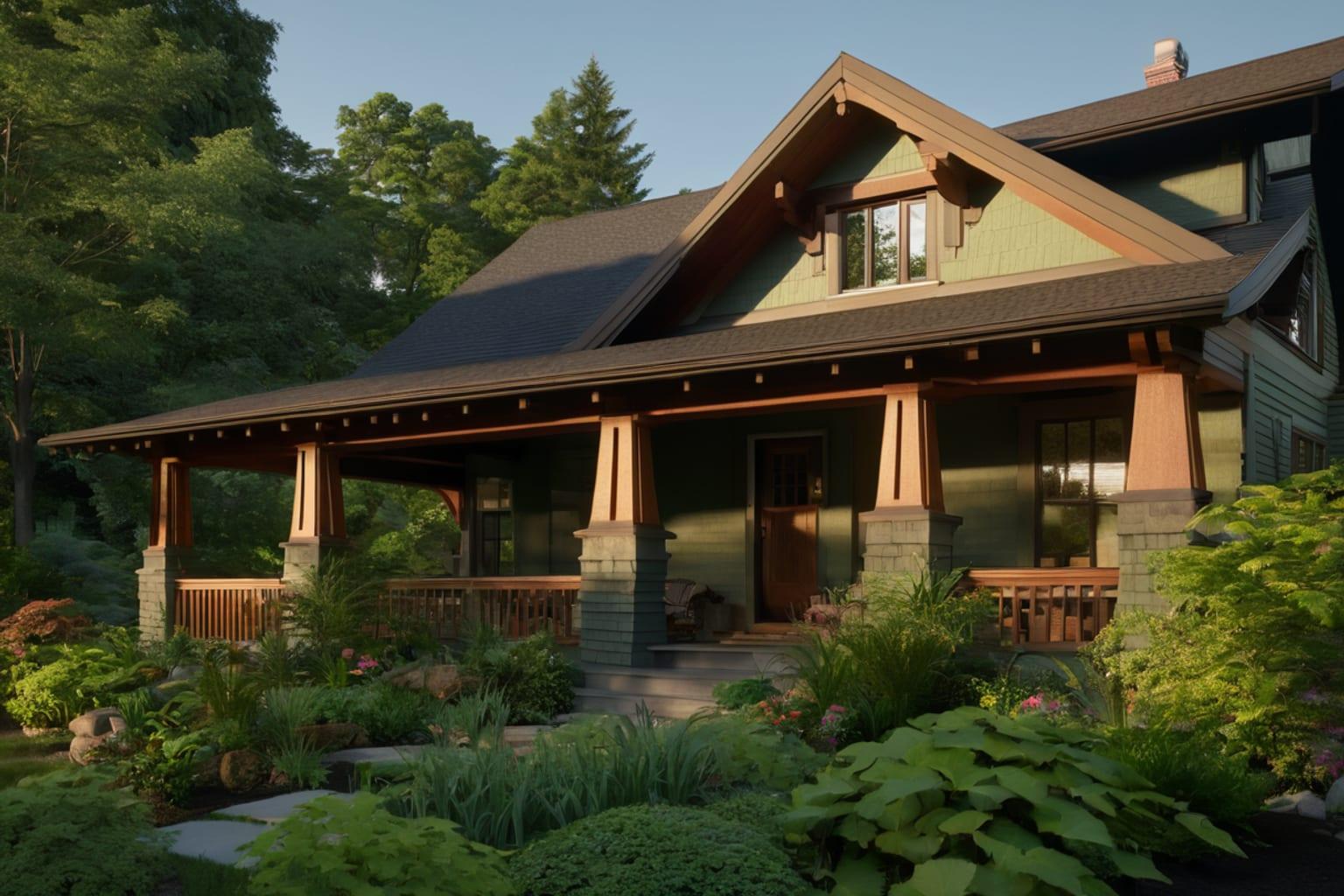
Exposed structural elements. Craftsman design celebrates rather than hides the structure. Exposed beams, rafters, and framing are prominent architectural features, not hidden behind finishes.
Handcrafted details. Decorative elements appear thoughtfully placed and deliberately crafted. This might include elaborate woodwork, tile work, or metalwork that shows the maker's hand.
Natural materials. Stone, wood, and clay predominate. Rather than vinyl or plastic, Craftsman homes feature genuine materials chosen for their character and longevity.
Built-in cabinetry. Quality built-ins—shelving, benches, storage—are integral to Craftsman design. These aren't afterthoughts; they're foundational to the aesthetic.
Overhanging eaves. Deep roof overhangs with visible roof brackets provide protection and architectural interest. These practical elements become beautiful details.
Front porches. Most Craftsman homes feature prominent covered porches that extend the living space and create a welcoming entry.
Sloped rooflines. Gable roofs and varied rooflines create visual interest and accommodate upstairs spaces efficiently.
Rich earth tones. Exteriors typically feature natural colors—chocolate browns, forest greens, warm taupes, clay reds—that complement natural surroundings.
Geometrical details. Craftsman design incorporates geometric patterns in windows, railings, and decorative panels that add visual complexity without ornamentation.
Craftsman Philosophy
Underneath the aesthetic is a philosophical commitment to quality and honesty. The Craftsman movement rejected the standardization of industrial production, insisting that everyday objects and buildings deserved beauty and quality. Every element should have purpose; nothing is added purely for decoration.
This philosophy influences how Craftsman homes function. They're designed for livability, with thoughtful proportions and efficient layouts that serve the people living there.
Explore our extensive collection of craftsman house plans to see how this timeless style adapts to modern living.
02Understanding Colonial Architecture
Colonial architecture emerged in America with European settlers in the 17th century. Based on traditional European (primarily English and Dutch) styles adapted to the American climate and available materials, Colonial design emphasizes symmetry, formal proportions, and classical elements.
Key Colonial Features
Symmetry. Colonial facades feature balanced, symmetrical designs. A centered front door with matching windows on either side, symmetrical chimneys—this sense of order and balance is fundamental to Colonial design.
Classical proportions. Colonial architecture employs classical ratios and proportions derived from ancient Greek and Roman architecture. These proportions are psychologically pleasing and create harmonious designs.
Shutters. Functional exterior shutters (or decorative versions evoking them) are classic Colonial elements that add vertical emphasis and historic authenticity.
Brick or clapboard siding. Traditional Colonial homes feature durable, classic materials—primarily brick or painted clapboard—that weather beautifully over time.
Pitched roofs. Steeply pitched roofs efficiently shed snow and rain, a practical feature that became stylistic in Colonial design.
Centered chimneys. Rather than edge chimneys, Colonial homes typically feature prominent centered chimneys that provide vertical emphasis and symmetry.
Pediment doorways. The entry often features a small roof or pediment above the door, creating a classical focal point.
Regular window placement. Windows are arranged in orderly, symmetrical patterns—a progression that creates visual rhythm.
Minimal exterior ornamentation. Unlike Craftsman homes that celebrate details, Colonial homes rely on proportion and symmetry rather than decoration. The beauty is in the disciplined restraint.
Two stories. Traditional Colonial homes are typically two stories, creating an efficient, compact footprint that was practical for early American life.
Colonial Philosophy
Colonial architecture represents order, tradition, and timeless proportions. It expresses stability and permanence. The style feels authoritative yet approachable—formal but livable. This balance between formality and comfort is why Colonial architecture has remained popular for four centuries.
03Direct Comparison
Let's directly compare these two styles across several dimensions:
Origins and Era
Craftsman: Emerged in the late 1800s (Arts and Crafts movement) and peaked in popularity 1900-1930. It's a relatively young American style, though it drew inspiration from European craft traditions.
Colonial: Emerged in the 1600s with European settlement and has remained popular in various forms for over 350 years. It's a genuinely historical American style with continuous evolution.
Exterior Aesthetic
Craftsman: Warm, organic, earthy. Natural materials, rich colors, visible details. Exteriors celebrate craftsmanship and material authenticity.
Colonial: Formal, refined, classic. Symmetrical, proportioned, restrained. Exteriors express timeless elegance and order.
Winner: Personal preference. Craftsman feels contemporary and organic. Colonial feels timeless and refined.
Rooflines
Craftsman: Complex, varied rooflines with multiple pitches, overhanging eaves, and visible structural details.
Colonial: Typically simple pitched roof, sometimes with gambrel design, creating clear silhouettes and efficient interior layouts.
Winner: Craftsman is more visually complex. Colonial is cleaner and simpler.
Decorative Philosophy
Craftsman: "Form follows function"—decoration is minimal and always serves a purpose. Details are honest expressions of construction.
Colonial: Decoration is avoided in favor of proportion and symmetry. Beauty comes from classical restraint, not applied ornament.
Winner: Similar but arrived at from different directions. Craftsman celebrates making; Colonial celebrates proportion.
Interior Layout
Craftsman: Typically feature open floor plans with visual connections between spaces. Built-ins and storage are integrated throughout.
Colonial: Traditional Colonials feature distinct rooms with clear separation. Modern Colonial designs increasingly adopt open floor plans while retaining symmetrical formality.
Winner: Modern Craftsman designs offer better open-plan flow. Traditional Colonials offer more formal separation. Modern Colonials are catching up.
Color Palette
Craftsman: Earth tones, naturals, rich colors. Exteriors feature warm browns, greens, taupes, reds, and deep colors that echo natural surroundings.
Colonial: Traditional colors. Whites, creams, soft grays, blacks. Pastels in some regional variations. The palette is intentionally restrained.
Winner: Craftsman offers more personality. Colonial offers timeless formality. Depends on preference.
Practical Considerations
Craftsman:
- Exposed details require more maintenance
- Natural materials age visibly but remain beautiful
- Details are time-consuming to replicate if damaged
- Built-ins offer excellent storage efficiency
- Typically slightly higher material costs due to natural materials
Colonial:
- Symmetrical, simple forms are cost-efficient to build
- Classic materials (brick, clapboard) are durable and low-maintenance
- Replacement parts are widely available
- Regular grid of windows improves symmetry but may not optimize views or natural light
- Typically slightly lower material costs
Winner: Colonial is lower-maintenance. Craftsman requires more attention but ages more beautifully.
Resale and Popularity
Both styles remain popular and marketable. Regional preferences matter:
- Craftsman is particularly strong in the West and Southwest
- Colonial remains dominant in the Northeast and Mid-Atlantic
- Both appeal nationally
Neither style will negatively impact resale value. Both are recognized, appreciated, and desirable.
04Regional Variations
Both styles adapt regionally, which complicates pure comparisons:
Craftsman variations: Bungalow Craftsman (smaller, single-story), Prairie Style Craftsman (horizontal emphasis, Midwestern), Spanish Colonial Craftsman (Southwest).
Colonial variations: Federal (refined, early 1800s), Greek Revival (temple-like proportions), Southern Colonial (larger, with columns), Cape Cod (compact, coastal).
These regional adaptations often blend Craftsman and Colonial elements, proving that styles evolve and influence each other over time.
05Which Style Is Right for You?
Choose Craftsman if you:
- Value handcrafted authenticity and visible quality
- Prefer warm, natural aesthetics
- Like open-plan living with integrated built-ins
- Appreciate details and are willing to maintain them
- Want a style that feels modern and organic
- Live in or are drawn to Western/contemporary aesthetic regions
Choose Colonial if you:
- Appreciate timeless, formal elegance
- Prefer clean, symmetrical forms
- Want low-maintenance, durable design
- Value tradition and classical proportions
- Like a style that feels established and permanent
- Live in or are drawn to traditional-leaning regions
Choose blended modern interpretations if you:
- Want open-plan flow with formal aesthetic
- Prefer clean contemporary interiors with classical exteriors
- Value efficiency and low-maintenance but appreciate style detail
- Want the best of both worlds—timeless design with modern livability
06Exploring Both Styles
To truly understand these styles, visit examples in person. Colonial neighborhoods often cluster (historic neighborhoods in many towns). Craftsman communities similarly concentrate (many Bungalow neighborhoods in older urban areas).
Walk through both neighborhoods. Spend time observing details, imagining yourself living there. Which style feels like home?
At House & Timber Plan Co., we offer extensive collections of both styles. Our craftsman house plans celebrate handcrafted authenticity and natural materials. Our colonial house plans express timeless elegance and formal proportion.
For a broader perspective on architectural style options, explore our two-story house plans collection, which includes both styles and many others.
07The Hybrid Approach
Modern architecture often blends styles. A home might feature Classical Colonial proportions with Craftsman details. Or Colonial formal symmetry with craftsman natural materials.
These hybrids often work beautifully because they combine the best of each philosophy: the timeless appeal of Classical design with the authentic craftsmanship of handmade elements.
08Making Your Final Decision
Your home's architectural style should feel authentic to you. Don't choose Craftsman because it's trendy or Colonial because it's traditional. Choose the style that makes you feel something when you look at it—that speaks to your aesthetic sense and values.
If you're torn, spend time in homes of each style. Notice which one feels right. Imagine living there for decades. Imagine selling it in 20 years. Imagine explaining why you chose it to friends.
The style that answers all these questions authentically—that's your style.
Explore our full collections of craftsman house plans and colonial house plans to find the perfect design. Whether you're drawn to the warmth and authenticity of Craftsman or the timeless elegance of Colonial, the perfect plan awaits.
For additional perspective on how architectural styles compare, see our article on Farmhouse vs. Craftsman House Plans.