
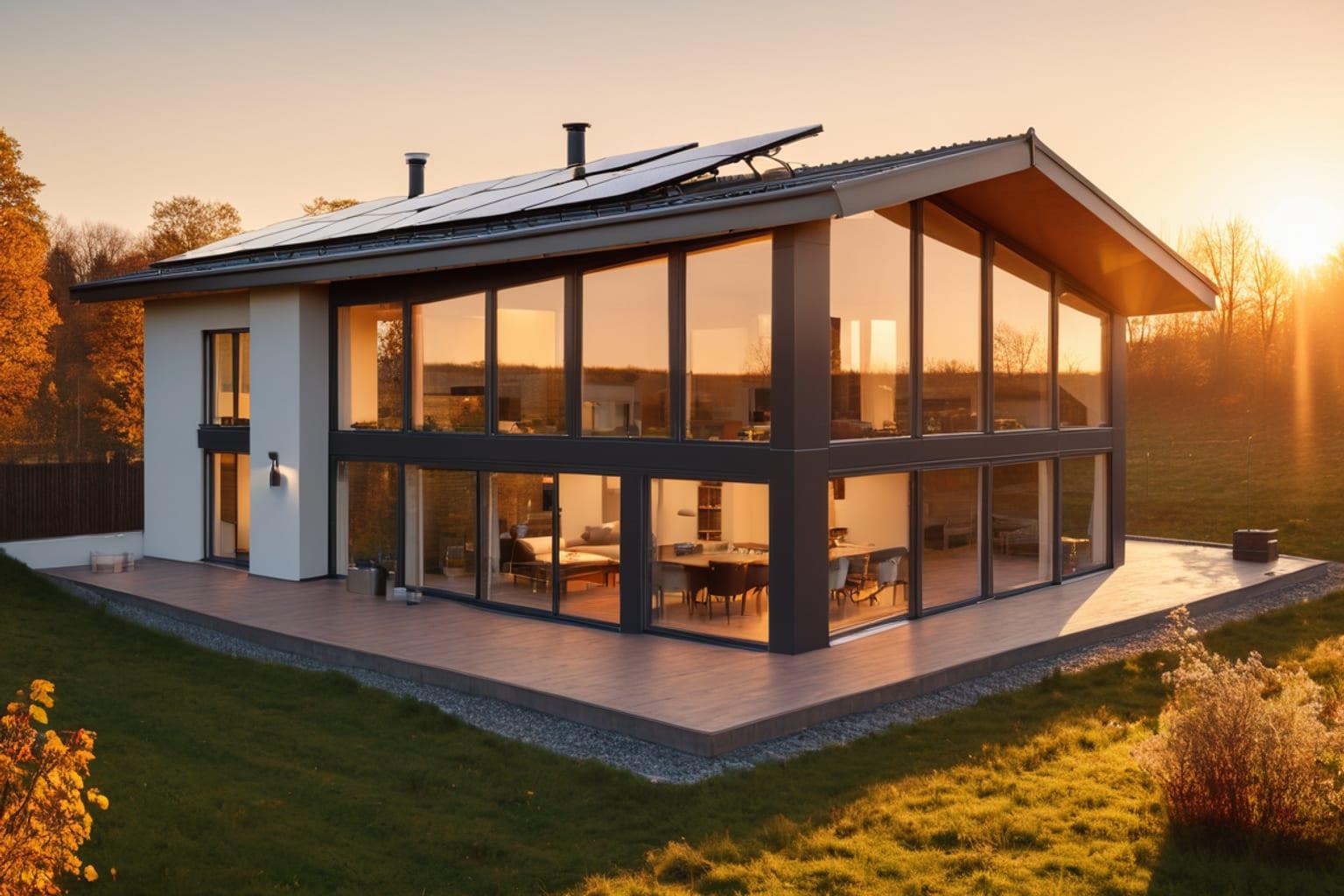
Energy efficiency is one of the most misunderstood aspects of house design. Builders market it relentlessly, homes are rated with efficiency scores, and the government provides tax credits for energy improvements. Yet most homeowners have no idea which specific features actually save them money versus which are just upscale finishes marketed as "efficient."
This guide cuts through the marketing and explains the energy efficiency features that genuinely impact your utility bills, their actual ROI, and how to incorporate them into your house plan.
01The Real Cost of Energy
Start with baseline understanding: what does energy actually cost?
Average U.S. energy costs (2025):
- Electricity: $0.14-0.16 per kilowatt-hour (varies widely by region; Hawaii averages $0.32, Louisiana $0.10)
- Natural gas: $10-12 per million BTUs (seasonal variation significant)
- Heating oil: $3.00-4.00 per gallon (where used in northeast)
For a typical 2,000 sq ft home in a temperate climate:
- Annual heating/cooling cost: $1,500-2,200
- Annual hot water heating: $400-600
- Annual other electric use: $800-1,200
- Total annual energy cost: $2,700-4,000
In cold climates (Minnesota, Wisconsin, Maine), annual costs run $4,000-5,500. In mild climates (California, Texas), costs might be $2,200-3,000. But the baseline is significant—we're talking about $250+ per month in an average home.
This context matters because it shows why energy efficiency features are worth considering. A $5,000 upfront investment that saves $600-800 annually in energy costs pays for itself in 6-8 years, then delivers pure savings for the remaining life of the home.
02The Most Impactful Energy Features (and Their ROI)
Not all efficiency features are created equal. Let me rank them by impact on actual utility costs.
#1: Insulation Quality and Quantity (Highest ROI)
Insulation is the foundation of energy efficiency. It directly reduces how hard your heating and cooling system must work.
The spec that matters: R-value R-value measures insulation effectiveness. Higher R-value = better insulation. Requirements vary dramatically by climate:
- Mild climates (southern U.S.): R-13 to R-19 walls, R-30 to R-38 attic
- Moderate climates (middle states): R-19 to R-21 walls, R-38 to R-49 attic
- Cold climates (northern states): R-21 to R-25 walls, R-49 to R-60 attic
What this means in practical terms:
- R-13 in walls: About 3.5 inches of fiberglass batts (minimum code)
- R-19 in walls: About 6 inches of fiberglass or mineral wool
- R-21 in walls: Typical in northern climates (6+ inches)
Attic insulation is where you see the biggest difference:
- R-30 attic: Minimal insulation (about 10 inches of fiberglass)
- R-38 attic: Standard in many climates (about 12-13 inches)
- R-49 attic: Cold climate standard (about 16-17 inches)
- R-60 attic: Premium in extreme climates (about 19-20 inches)
Heat rises, so attic insulation is your highest-payoff investment. An upgrade from R-30 to R-49 attic insulation costs $500-1,200 additional at construction time and reduces heating/cooling costs 15-25%.
Construction method matters:
- Blown-in cellulose or fiberglass: Most cost-effective, R-3.5 per inch
- Spray foam: More expensive but creates air seal simultaneously, R-6+ per inch
- Rigid foam board: High performance, used in walls/foundation, R-5 to R-7 per inch
The ROI: Upgrading to code-appropriate insulation for your climate typically costs $1,500-3,500 more and saves $300-600 annually. Payback: 5-12 years, with zero additional maintenance.
#2: Air Sealing (Among Highest ROI)
Most homes lose 15-30% of heating/cooling energy through air leaks—around windows, doors, outlets, and wall penetrations. You can have great insulation but if air flows around it, you've wasted the investment.
Critical air sealing locations:
- Around windows and doors (weatherstripping, caulking)
- Basement rim joist (where foundation meets wood framing)
- Attic bypasses (holes where utilities penetrate ceiling)
- Electrical outlets and switch plates on exterior walls
- Bathroom/kitchen exhaust duct penetrations
- Recessed lights in exterior walls
Professional air sealing (done at construction time) costs $500-1,500 and is dramatically more cost-effective than trying to fix it after completion. This is typically done with quality caulk, weatherstripping, spray foam sealant, and careful attention to details.
The ROI: Air sealing investments typically cost $700-1,500 and reduce heating/cooling costs 10-15%. Payback: 4-8 years. It's invisible but incredibly effective.
#3: Window Quality (Moderate ROI, varies by climate)
Windows are energy-intensive. They're the weak point in any insulation strategy because glass transfers heat much more readily than insulation.
Window performance metrics:
- U-factor: How much heat transfers through. Lower is better. Range: 0.25-0.40
- Single pane (terrible): U-0.95+
- Dual pane standard: U-0.35-0.40
- Dual pane low-E: U-0.30-0.35
- Triple pane: U-0.15-0.25
- Solar Heat Gain Coefficient (SHGC): How much solar heat passes through. Lower in hot climates, higher in cold climates where solar gain helps.
Climate-appropriate window choices:
- Cold climates: Upgrade to high-performance dual-pane low-E or triple-pane. Cost premium: $8-15 per square foot installed vs. standard windows. For a home with 250 sq ft of windows, that's $2,000-3,750 premium.
- Moderate climates: Standard dual-pane low-E sufficient. Cost premium: $3-5 per sq ft. Same 250 sq ft windows: $750-1,250 premium.
- Warm climates: Focus on solar control (SHGC); frame insulation matters more than glass package. Cost premium: $2-4 per sq ft.
Important caveat: Window upgrades have modest ROI in moderate/warm climates but stronger ROI in cold climates. A $2,500 window upgrade in Minnesota might save $200-300 annually (payback: 8-12 years). The same upgrade in Florida might save $80-120 annually (payback: 20+ years).
The real window opportunity: Proper installation. A high-performance window installed poorly with air leaks around the frame wastes the investment. Quality installation matters more than window cost.
#4: Home Orientation and Passive Solar Design
This is baked into your house plan—you can't retrofit it easily.
How orientation impacts energy use:
- North-facing walls get no direct sun (coldest side in winter, not too hot in summer)
- South-facing walls get intense winter sun (warming potential) but summer sun (cooling load)
- East-facing walls get morning sun (not typically problematic)
- West-facing walls get afternoon sun (significant cooling load in summer)
Strategic design responses:
- Position large windows on south side (captures winter sun when you need heat)
- Minimize west-facing glass (reduces summer cooling load)
- Use roof overhangs to shade south windows in summer while allowing winter sun penetration
- Position living areas on south side, less-used areas (garages, storage) on north side
A well-oriented house with proper overhangs can reduce cooling costs 10-15% in warmer climates at zero additional cost—it's just smart planning.
Open floor plans and south-facing windows: Homes with large south-facing glass and open floor plans can utilize solar gain efficiently in winter. Closed-off spaces get solar benefits but can't distribute that warmth throughout the home. Another argument for open-concept design in certain climates.
#5: HVAC System Sizing and Efficiency
An oversized HVAC system cycles on-and-off inefficiently, wasting energy. An undersized system can't maintain temperature. Right-sizing matters.
The spec: SEER rating for air conditioning, AFUE for furnaces
- SEER (Seasonal Energy Efficiency Ratio): Higher is better. Modern standard: SEER 16-21. Minimum code: SEER 13.
- AFUE (Annual Fuel Utilization Efficiency): Percentage of fuel converted to heat. Higher is better. Modern standard: 90-98%. Minimum code: 80%.
What the numbers mean:
- Upgrading from SEER 13 to SEER 18 AC unit costs $1,500-3,000 more and saves $150-300 annually (depending on climate). Payback: 7-15 years.
- Upgrading from AFUE 80% to AFUE 95% furnace costs $800-1,500 more and saves $200-400 annually in heating climates. Payback: 3-6 years.
Heat pumps: Modern heat pumps (air-source) can achieve exceptional efficiency for both heating and cooling. They're pricier than traditional AC + furnace but can save significant energy. ROI depends heavily on your climate and the system you're replacing.
Right-sizing: This is crucial and often done wrong. An HVAC contractor performs a "load calculation" to determine proper system size based on insulation, window area, orientation, and climate. An oversized system costs more upfront and operates less efficiently.
#6: Water Heating Efficiency
Water heating is typically 15-20% of household energy use.
Options by ROI:
- Standard electric water heater: Least expensive, least efficient. Costs $400-600 upfront, generates ~$500-800 annual water heating cost
- High-efficiency electric heater with insulation blanket: $600-900 upfront, saves 10-15%, payback modest
- Natural gas water heater: More efficient than electric if natural gas is cheaper than your electricity rate (usually is)
- Heat pump water heater: 2-3x more efficient than electric resistance. Costs $1,500-2,500, saves $300-500 annually, payback: 4-7 years
- Solar water heating: Highly efficient but expensive. Costs $3,000-6,000, saves $300-600 annually, payback: 7-15+ years
For most homes: Natural gas water heater offers good efficiency at moderate cost. Heat pump water heater is premium option with solid ROI.
03Features That Are Marketed but Overrated
Not all "efficient" features deserve space in your plan or budget.
Radiant floor heating
- Often marketed as super-efficient
- Reality: Same efficiency as forced air if both systems are properly designed. The advantage is comfort (radiant feels warmer at lower temps), not efficiency.
- Cost premium: $1,500-3,500
- Energy saving: Minimal to none
- ROI: Poor for efficiency, moderate for comfort
Smart thermostats
- Marketed as game-changers
- Reality: They're useful for convenience but only save money if your behavior changes. A $250 smart thermostat might save $50-100 annually if you actually program it differently.
- ROI: 3-5 years if you actively use them, worse if you don't change behavior
LED lighting throughout
- Obviously more efficient than incandescent
- Reality: Lighting is only 10-15% of household energy. Upgrading all lighting might save $100-150 annually.
- Cost premium: $200-400
- ROI: 2-4 years, but mostly valuable if you leave lights on constantly
ENERGY STAR certification
- Homes can be ENERGY STAR certified
- Reality: It's a useful label showing a home meets efficiency thresholds, but it's just a collection of the features discussed above. The label itself doesn't save energy.
04Designing for Energy Efficiency: Practical Integration
When choosing or customizing a house plan, prioritize efficiency in this order:
Priority 1: Climate-appropriate insulation levels
- Ensure your plan calls for R-values suitable for your location
- This is non-negotiable and has the highest payback
Priority 2: Air sealing detail
- Look for construction documents that specify air sealing details
- Request additional air sealing in high-risk areas (attic bypasses, rim joist)
Priority 3: Window selection for your climate
- Cold climates: Invest in high-performance windows
- Moderate climates: Standard low-E dual-pane sufficient
- Warm climates: Focus on solar control over insulation value
Priority 4: Orientation and passive solar
- If choosing between similar plans, select one with better south-facing window placement
- This is zero-cost optimization if addressed in plan selection
Priority 5: Right-sized HVAC
- Have your HVAC contractor perform load calculations before selecting unit size
- Don't let the contractor oversell you an unnecessarily large system
Priority 6: Efficient water heating
- If natural gas available, specify natural gas water heater
- If all-electric, consider heat pump water heater
- Solar adds value in very sunny climates but has longer payback
For more on selecting features that matter for your specific situation, see building a house on a budget and how to estimate building costs from a house plan.
05The Math on Energy Efficiency Investments
Let's look at a realistic example: $2,000,000 home with $300,000 construction budget.
Scenario 1: Code minimum (baseline)
- Standard insulation (R-13 walls, R-30 attic)
- Standard dual-pane windows
- Standard SEER 13 AC, AFUE 80% furnace
- Standard electric water heater
- Estimated annual energy cost: $3,600
Scenario 2: Moderate efficiency (+$5,000 upfront)
- Upgraded insulation (R-19 walls, R-49 attic)
- Upgraded windows (R-0.32 U-factor)
- SEER 16 AC, AFUE 90% furnace
- Insulated electric water heater
- Estimated annual energy cost: $2,400
- Annual savings: $1,200
- Payback: 4.2 years
Scenario 3: High efficiency (+$12,000 upfront)
- Premium insulation (R-21 walls, R-60 attic)
- High-performance windows (U-0.25)
- SEER 21 AC, AFUE 96% furnace
- Heat pump water heater
- Estimated annual energy cost: $1,900
- Annual savings: $1,700
- Payback: 7 years
In both upgrade scenarios, the energy efficiency investments pay for themselves within the first decade and deliver pure savings for decades after.
06Long-Term Value and Resale
Energy-efficient homes command a measurable resale premium:
- Homes with energy-efficient features sell 3-5% higher on average
- Buyers increasingly factor energy costs into home purchase decisions
- ENERGY STAR certified homes show stronger resale premium
This means efficiency investments deliver dual ROI: direct energy savings plus higher resale value. The payback analysis above doesn't even include resale premium.
07The Bottom Line
Energy efficiency isn't about marketing badges or looking "green." It's about reducing your operating costs. The features with the strongest ROI are:
- Adequate insulation for your climate
- Careful air sealing
- Climate-appropriate windows
- Passive solar design through orientation
- Right-sized HVAC systems
Invest in these features at construction time. Retrofitting later is dramatically more expensive and often impossible. A $3,500 insulation investment during construction becomes a $12,000+ project after walls are closed.
Choose a house plan designed with efficiency in mind, specify the right building assemblies for your location, and you'll enjoy both lower utility bills and better resale value for decades to come.
Browse small house plans and ranch house plans—smaller and simpler layouts naturally have lower energy costs and faster paybacks on efficiency investments.